Editorial Analysis
Rail systems, dispatch software, maintenance records, and station communications all sit inside a broader resilience picture. The most useful coverage explains how transit agencies prepare, communicate, and recover rather than waiting for a disruptive incident to define the topic.
Key Takeaways
- Transit cyber resilience depends on operations teams as much as on security specialists.
- Service continuity and public communication are core parts of the risk story.
- Readers need reporting on readiness, not just reporting after a failure.
Cyber risk sits inside service risk
Transit agencies do not experience cybersecurity as an abstract technology category. They experience it through service reliability. If dispatch tools slow down, if route data becomes unreliable, or if station communications break at the wrong moment, the public feels the result as operational uncertainty.
Operations staff are part of the defense
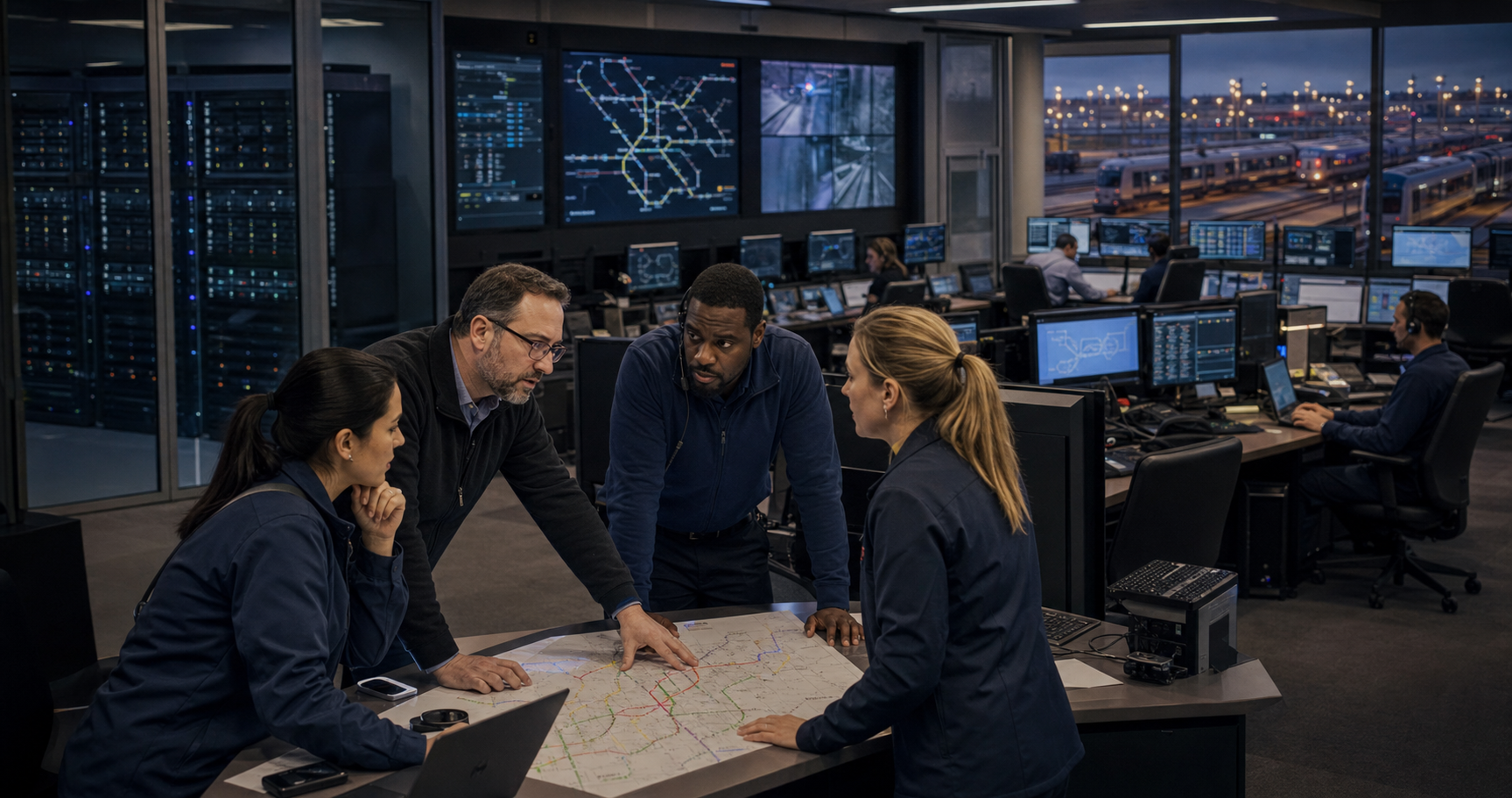
A transit control room is one of the clearest places where cybersecurity and operations overlap. Dispatchers, rail supervisors, maintenance planners, communications staff, and security specialists all need to understand what suspicious behavior looks like and how decisions get escalated.
Readiness stories matter before the crisis
There is value in covering drills, vendor dependencies, backup procedures, segmentation plans, and public messaging before a disruption occurs. Doing so normalizes resilience as part of transportation governance instead of treating it like a niche digital issue.